 |
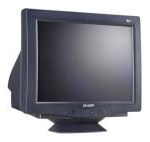
Cathode Ray Tubes or CRTs are composed of a large, hollow piece of glass that all the air has been pumped out of (a vacuum). The glass tube is a roughly squared off bell shape and the glass that forms the viewing area, the wide end, is covered with thousands of colored dots made of phosphorescent paint. At the back of the CRT are electron guns that fire electrons at the viewing area. The glass, shielding and equipment make CRTs large and heavy but as the older technology they are cheaper to manufacture. A cathode ray tube uses technology similar to that of a television. Three devices called electron guns are positioned at the back of the tube. When charged with electricity the electron guns fire beams of electrons at the screen in the front. The electron stream (beam) fired from each electron gun is bent by magnetic fields inside the monitor to cause the beam to traverse over the screen in horizontal lines from left to right and top to bottom. The magnetic fields are calibrated so that the beams will pass through a metal grid called the 'shadow mask' which helps assure that the electron beams hit very specific locations on the glass front. The beams are turned on and off very rapidly, allowing the beam to skip over parts of the screen. When a beam hits the front of the tube, it strikes small dots of phosphorescent chemicals inside tiny honeycomb cells in the glass. When the chemicals are struck they get excited and the cell glows. When struck by more than one kind of electron gun, the colors mix and thus you get the full range of colors although the electron guns provide just red, green and blue.
|